
Public parks and open spaces are core assets that park staff manage every day.
In addition to being recreational amenities and gathering places, they are reflections of a community’s values and living ecosystems. Incorporating native vegetation into these spaces is one of the most impactful ways municipalities can invest in biodiversity, improve stormwater management, reduce long‑term maintenance needs, and create meaningful opportunities for visitor education. One of the greatest strengths of native vegetation is its flexibility; native plantings can be integrated into underutilized and restrictive areas, or ones that are otherwise costly to maintain, offering communities a practical way to enhance ecological, aesthetic, and operational performance.

Native plantings along a multiuse park and trail enhance environmental aesthetics and improve stormwater management.
A common misconception of native plantings is that they are only tall prairie grasses and showy wildflowers. While these widely recognized native plants are beautiful and valuable, native design can be far more adaptable. Short forbs and low‑growing grasses, managed meadow systems with defined edges, and structured plant palettes that complement formal park design are all viable alternatives to incorporating natives into park and open-space design. These alternative approaches can provide many of the same ecological benefits as taller prairie species, such as deep root systems, pollinator support, and soil stabilization, while also maintaining sightlines and a more manicured appearance. This flexibility allows park managers to meet community aesthetics expectations without sacrificing ecological integrity. Thoughtful design elements such as mowed borders, educational signage, and clear transitions between turf and native areas can further communicate the intention and care behind these landscapes.
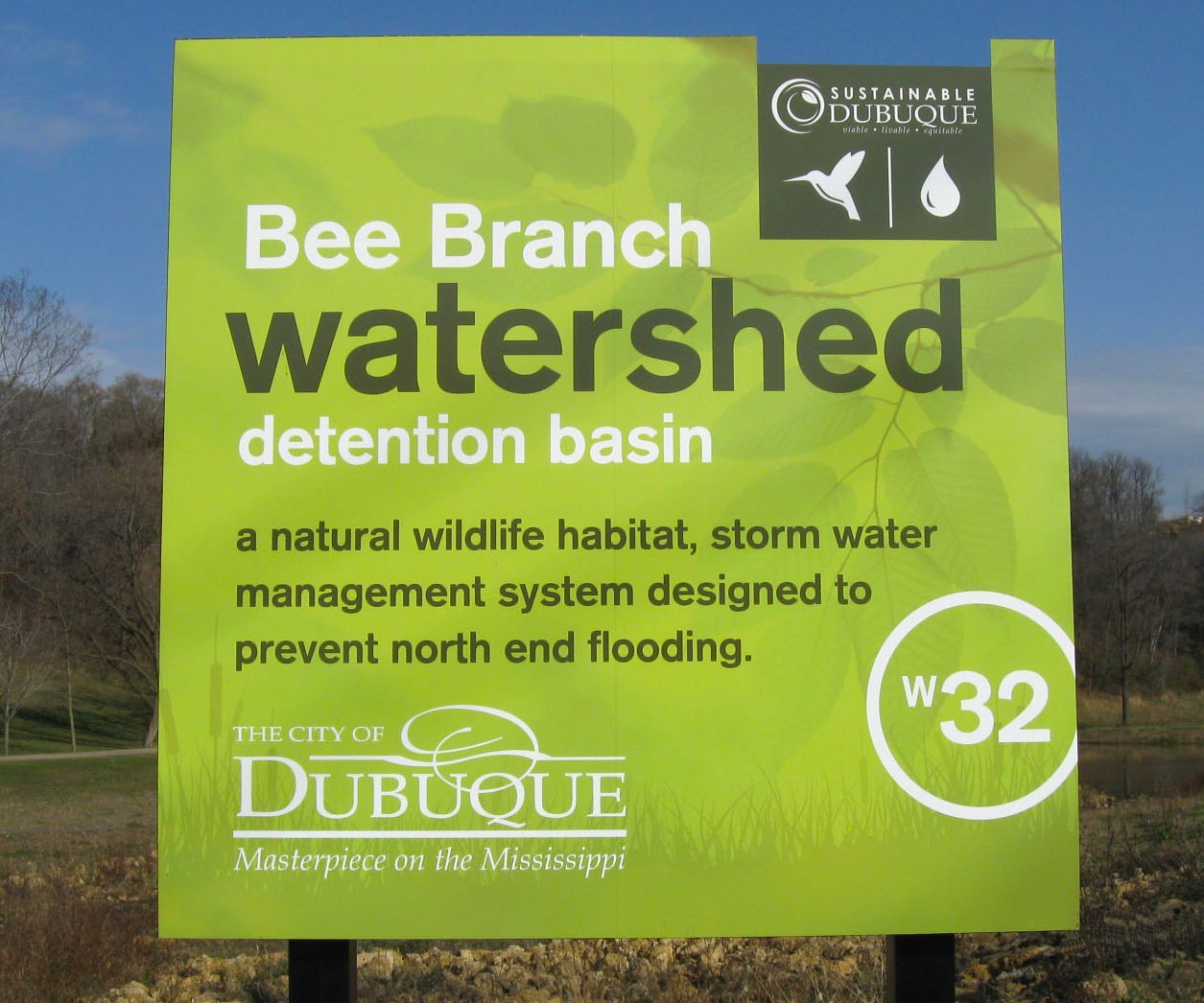
The City of Dubuque utilizes the Bee Branch watershed area as an opportunity for public education, wildlife enhancement, and stormwater management.
Many community parks maintain large expanses of turf simply out of routine, even when those areas serve no functional purpose. Native plantings become especially beneficial in these parts of parks that are not actively used for recreation but are still being regularly mowed. Converting turf to native vegetation reduces mowing frequency, fuel consumption, and labor hours, while also decreasing the need for fertilizers or irrigation. Over time, native plantings typically require less maintenance than traditional turf, making them both environmentally responsible and fiscally efficient choices.
Native vegetation can also transform stormwater infrastructure, a very important aspect of our ecosystem, from a maintenance burden into a functional landscape feature. Rather than acting solely as engineered basins or drainage areas, these spaces can be elevated into multi‑purpose assets when planted with native species. Deep-rooted plants improve water infiltration, filter pollutants, slow runoff, and stabilize slopes. In doing so, they help create visually engaging landscapes that support habitat and seasonal interest, turning what might otherwise appear as mowed depressions into educational features that demonstrate sustainable water management in action.

Master planning efforts for the San Damiano property in Monona depict prairie meadows, woodland vegetation, open space, wetland, and stormwater management opportunities.
Beyond ecological and functional benefits, a compelling reason to invest in native vegetation is its educational value. Parks are among the most accessible public spaces in any community, making them ideal environments for informal learning opportunities. Native plantings open the door to interpretive signage explaining stormwater processes, educational sessions on ecology and pollination, citizen science projects, volunteer planting events, and opportunities for visitors to observe wildlife throughout the seasons. When park users witness monarch butterflies feeding on host plants’ nectar, see birds foraging on native seedheads, enjoy seasonal color changes, or learn how deep-rooted prairie plants help reduce flooding, sustainability become tangible and memorable. Native landscapes invite curiosity, encourage questions, and help connect people to the natural systems that support their communities.
Although native plantings require thoughtful planning and careful establishment, their long-term benefits are substantial. Reduced mowing, lower maintenance costs, enhanced stormwater performance, and increased habitat value all contribute to a more resilient and adaptable park system. Public parks have long served as places for recreation and gathering. By embracing and incorporating native vegetation into stormwater basins, underutilized lawn areas, and intentionally designed park spaces, they can also become places of restoration, resilience, and learning.
Author
