
Sumner Walnut Street Stormwater Improvements
For years, flooding was an unwelcome reality for the City of Sumner, Iowa. Repeated storm events challenged residents, infrastructure, and public safety, culminating in a devastating 2017 storm that dropped approximately 10 inches of rain in just 24 hours. Roads became impassable, power was disrupted, and the community was left confronting the growing reality that its existing stormwater system could no longer keep pace with increasingly intense rainfall events.
Recognizing that piecemeal repairs would not solve the problem, the City partnered with MSA to take a comprehensive look at the watershed and stormwater system. Through detailed hydrologic analysis, watershed modeling, and evaluation of multiple design alternatives, the team identified a long-term solution that would not simply move water faster but strategically manage it before it reached vulnerable neighborhoods.
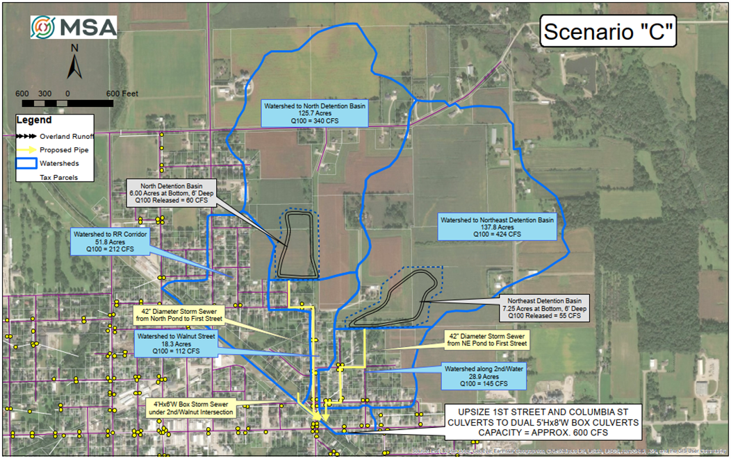
The resulting effort became a multi-phase flood mitigation program designed to protect the community from future flood events while positioning Sumner for long-term resilience. The first phase included construction of detention basins capable of capturing and storing stormwater before it entered the city. Together, the basins provide approximately 95 acre-feet of storage and reduced peak flows entering the community from roughly 750 cubic feet per second to about 120 cubic feet per second during major storm events. Beyond flood protection, the basins also improve water quality by capturing sediment and slowing runoff.
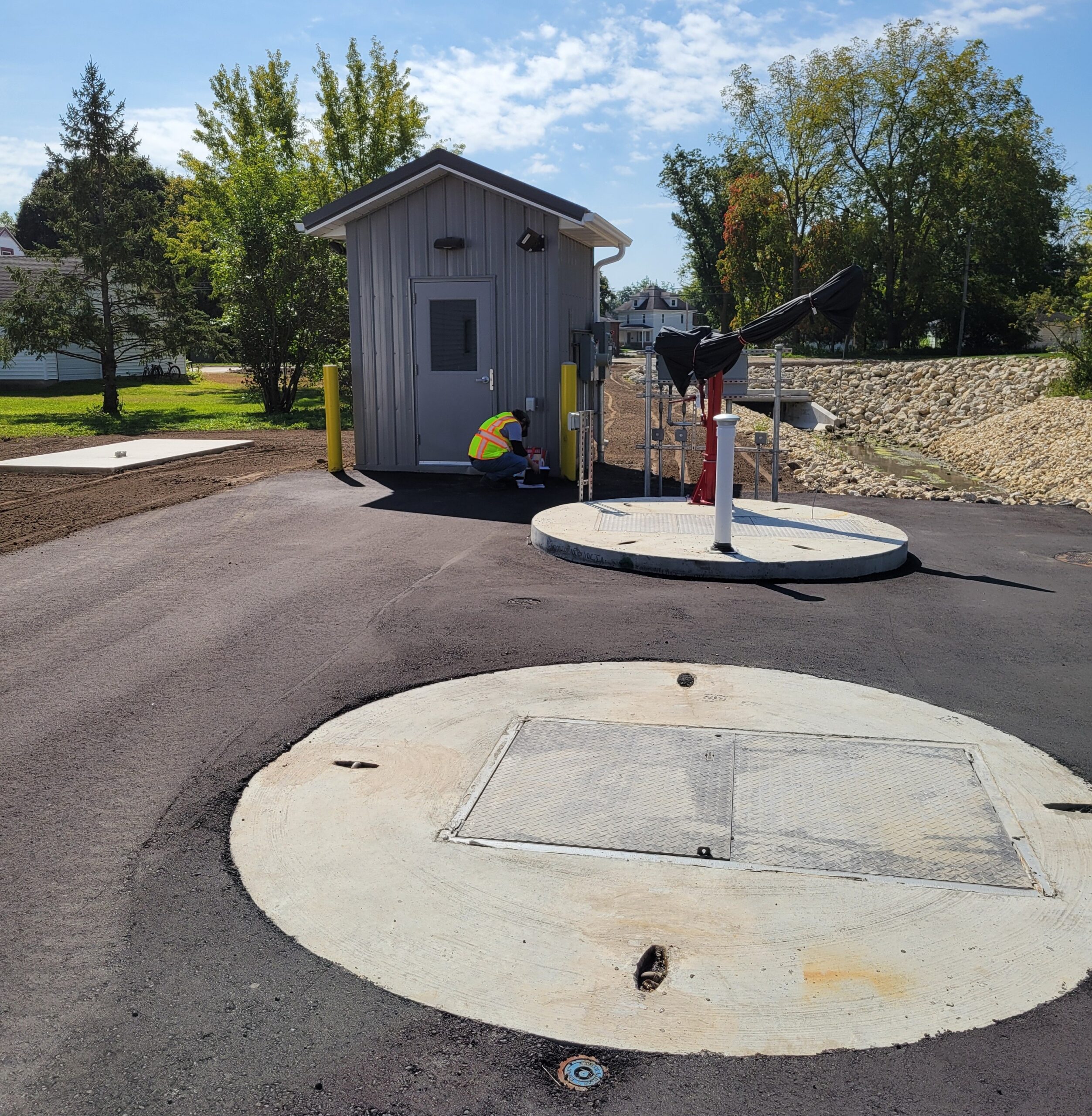
Building on that foundation, the Walnut Street Stormwater Improvements project completed the critical conveyance infrastructure needed to move stormwater safely through the community and to the Little Wapsipinicon River. The project included approximately 2,600 feet of stormwater conveyance improvements, including large-diameter reinforced concrete pipe, box culverts, drainage channel enhancements, and related infrastructure improvements. A new sanitary sewer lift station was also incorporated into the design, resolving a long-standing conflict between stormwater and sanitary sewer systems while helping reduce inflow and infiltration during storm events.
Like many municipal infrastructure projects, the work was not without challenges. The project team navigated constrained urban work areas, utility conflicts, extended wet conditions, river surcharges, and even a high-pressure gas main strike during construction. Success required close coordination among the City, contractor, utility providers, funding agencies, and residents. Through proactive communication and adaptive project management, construction was completed with zero lost-time injuries, while maintaining access for residents, businesses, and community institutions throughout the process.
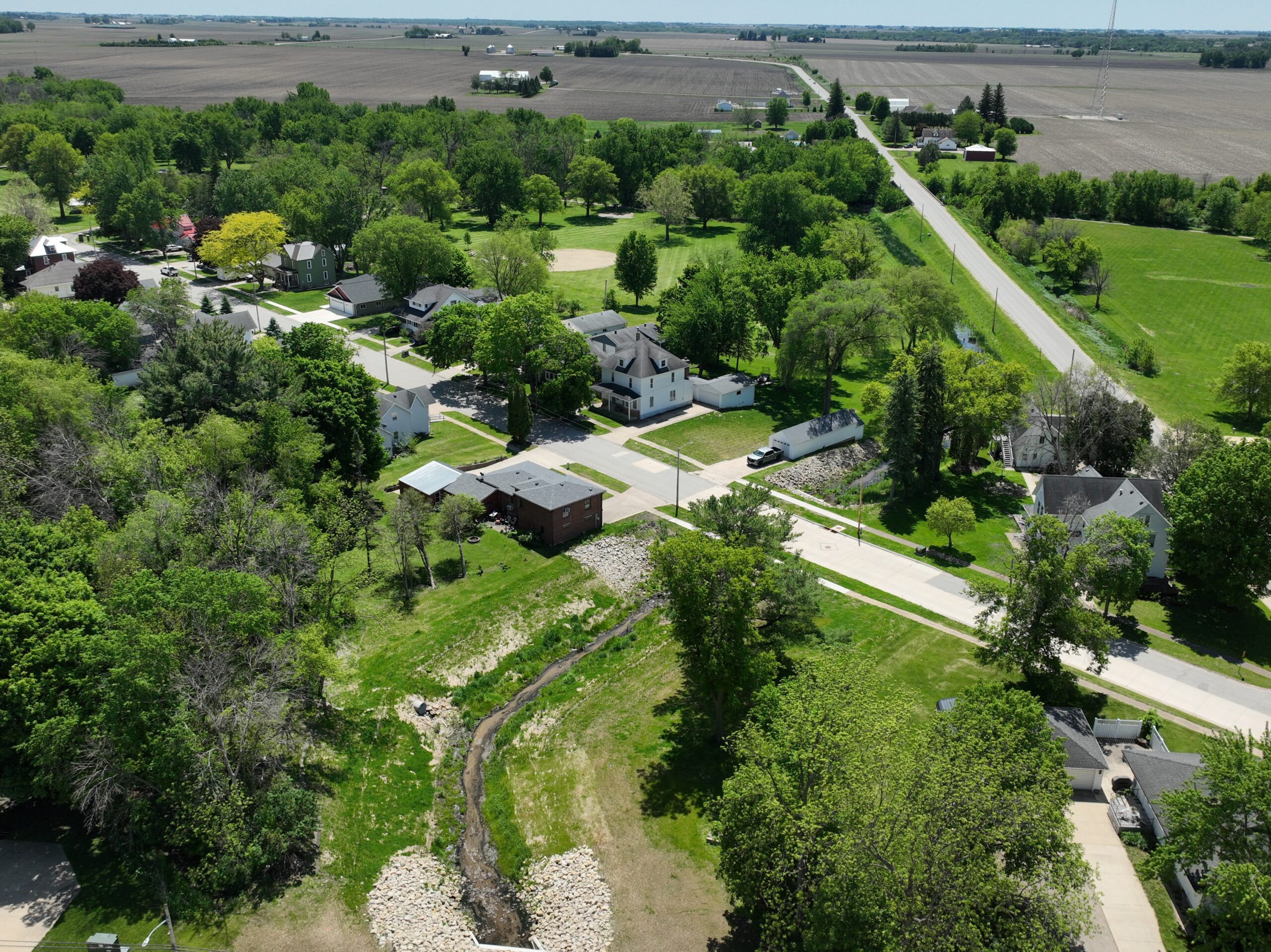
Environmental stewardship was equally important. The project incorporated habitat-friendly culvert designs, wetland seeding within drainage corridors, and careful coordination with regulatory agencies to protect natural resources and wildlife. These enhancements ensured the project delivered benefits beyond flood reduction, creating a more resilient and environmentally responsible system for future generations.
What makes the Walnut Street Stormwater Improvements project particularly noteworthy is not just the infrastructure itself, but the vision behind it. The City committed to nearly a decade of planning, design, funding coordination, and phased implementation to transform a recurring problem into a long-term community asset. By combining watershed-scale planning, local investment, and FEMA Hazard Mitigation Grant Program funding, Sumner successfully delivered a solution that protects homes, businesses, and public infrastructure from future flooding while improving overall system performance.
Today, the Walnut Street Stormwater Improvements project stands as a model for how communities can leverage engineering innovation, strategic funding, and long-range planning to address complex flooding challenges. For municipalities facing similar concerns, the project demonstrates that resilient infrastructure is about more than managing stormwater. It is about protecting people, safeguarding investments, and building confidence in a community’s future.
This project was chosen to receive a 2026 Project of the Year Award in the Environment category, $2.5M-$5M division, by the American Public Works Association Iowa Chapter.
Client
City of Sumner
Location
Sumner, IA
Services Provided
Bridges, Roads & Highways
Municipal Infrastructure
Water Resources
Contact Project Lead

Nichole Sungren, PE
Team Leader
Related Projects
Sumner Stormwater Detention Basin Design
Stormwater detention basin system protects from 100-year flooding.
More1,000-year Flood Study & Modeling
The Milwaukee Metropolitan Sewerage District (MMSD) collects and reclaims wastewater from 28 communities and provides flood management for the greater Milwaukee area. MMSD wanted to help communities identify areas prone to flooding during extremely large storm events and plan for future infrastructure improvements to protect residents and boost community resilience.

To achieve this goal, MMSD partnered with MSA and commissioned a study for Milwaukee County focused on the 1,000-year flood event. The goal was to understand how a catastrophic storm could impact the communities it serves. With extreme rainfall events increasing in frequency and intensity, MMSD sought a proactive, data‑driven approach to identify flood‑vulnerable areas, guide resilient infrastructure planning, and protect residents across all 238 square miles of the county.
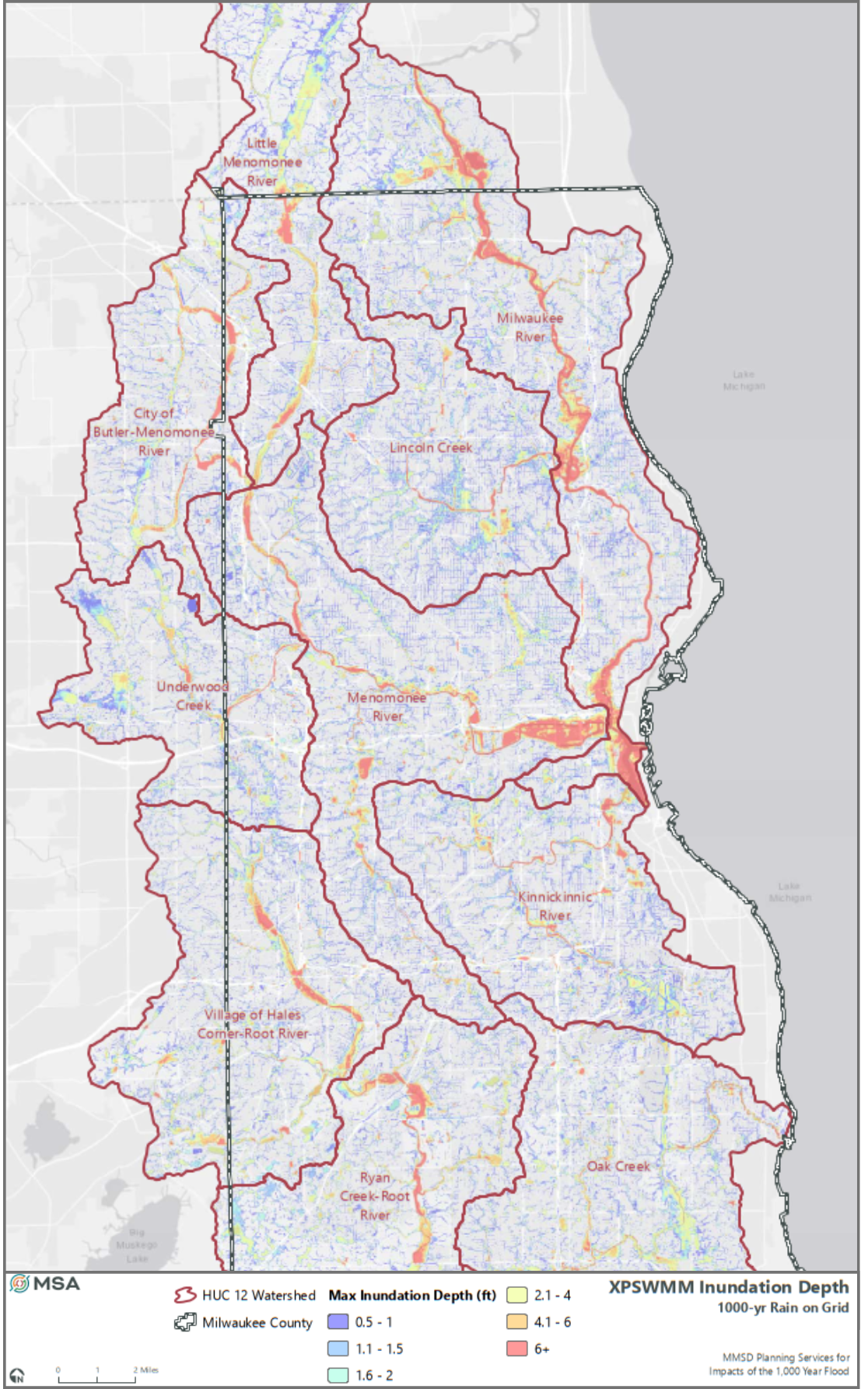
Due to the project’s massive scope and comparatively limited budget, MSA, by necessity, developed an innovative, streamlined approach to complete the work. MSA’s approach to Phase 1 of the project employed high-level 2D rain-on-grid modeling utilizing high-resolution LiDAR topographic mapping and available GIS data describing major components of drainage infrastructure to predict the magnitude of flooding on a HUC12 watershed basis. The results from adjacent HUC12s were stitched together across the entire county and used to assess flooding from upland (non-riverine) sources. To understand which portions of the county would be most vulnerable to flooding, MSA and MMSD developed a three-tier prioritization framework:
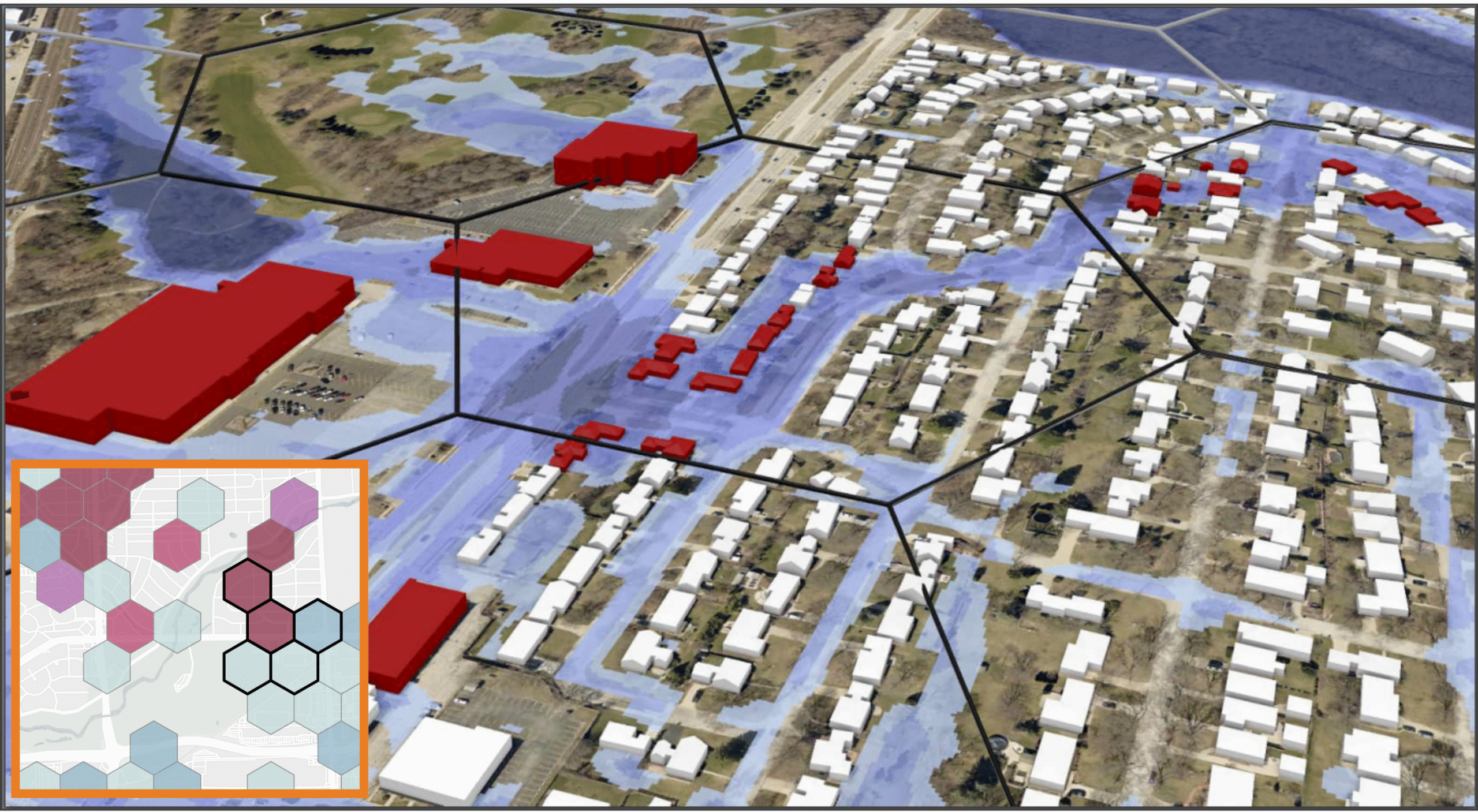
Impacted Buildings and Roads: Any building footprint that touched 1 foot of water was flagged. Roadways were broken into uniform lengths, and any street with more than 1 foot of water at the centerline was also flagged.
Flooding Source: MMSD has excellent modeling for riverine flooding. This study wanted to focus on the upland areas; therefore, any flooding within a mapped river floodplain was masked and not considered for this analysis.
Socioeconomic Factors: Social Vulnerability refers to the resilience of communities when confronted by external stresses, like a very large flood event. The U.S. Census Bureau has a mapped Social Vulnerability Index (SVI) which was overlaid on the results to identify regions of the study area that might be underserved.
The resulting countywide maps provided a clear visual guide to identify “hot spots” deserving more detailed analysis. Representatives from the communities within the study reviewed the Phase 1 results and identified areas to study in more detail (Phase 2).
For Phase 2 of the project, constituent municipalities were asked to review Phase 1 results and identify areas of particular interest to them. MSA constructed high‑detail 1D/2D hydrologic and hydraulic models of these targeted areas in PCSWMM and XPSWMM that integrated the mapped impervious areas and extensive storm sewer networks. The modeling outputs provided better resolution that can be used to support redevelopment, infrastructure upgrades, and a reference benchmark for extrapolating detailed insights to areas not included in this phase. These models now serve as critical decision-making tools for communities aiming to strengthen flood resilience amid a changing climate.
MSA’s innovative modeling approach, combined with MMSD’s collaborative leadership, enabled a cost-effective, countywide assessment that distilled vast data into actionable insights. MSA was recently authorized to conduct a third phase of the project which will use modeling completed in Phase 1 to simulate a near-1,000-year flood event Milwaukee experienced in August 2025 to further refine regional resilience strategies.
Together, MMSD and MSA are equipping Milwaukee County with a clearer understanding of where the greatest flood vulnerabilities lie — and providing communities with the tools they need to plan smarter, protect people and property, and build long-term climate resilience.
More