
Peterson Family Dairy Anaerobic Digester & Lagoon
Peterson Family Dairy, a fourth-generation farm, is located near River Falls, Wisconsin. They have partnered with Vanguard Renewables, a Massachusetts-based sustainable waste management and clean energy company, for construction and operation of an anaerobic digester. Food manufacturers, retailers and processors across the Minneapolis-St. Paul region will be provided an opportunity for sustainable and efficient food waste recycling, as it will be combined with the farm’s manure to produce renewable natural gas energy. The facility has the capacity to generate approximately 289,000 MMBtu of renewable natural gas annually — enough to power 53,000 homes and businesses every year.
MSA involvement included permitting of the digester and permitting and design of the digestate storage, transfer from farm to digester site, a manure loadout facility, and a permanent manure pipeline from the farm to adjacent farmland for nutrient application.

To transfer the farm’s generated manure to the digester site, MSA agricultural engineers proposed a series of two reception tanks and 955 linear feet of high-density polyethylene (HDPE) piping. The first reception tank is designed as a wedge pit which allows for unwanted material to settle out while allowing manure and solids to go through. The second reception tank is located immediately adjacent to the digester site and allows for manure to be metered into the digester and separator systems.
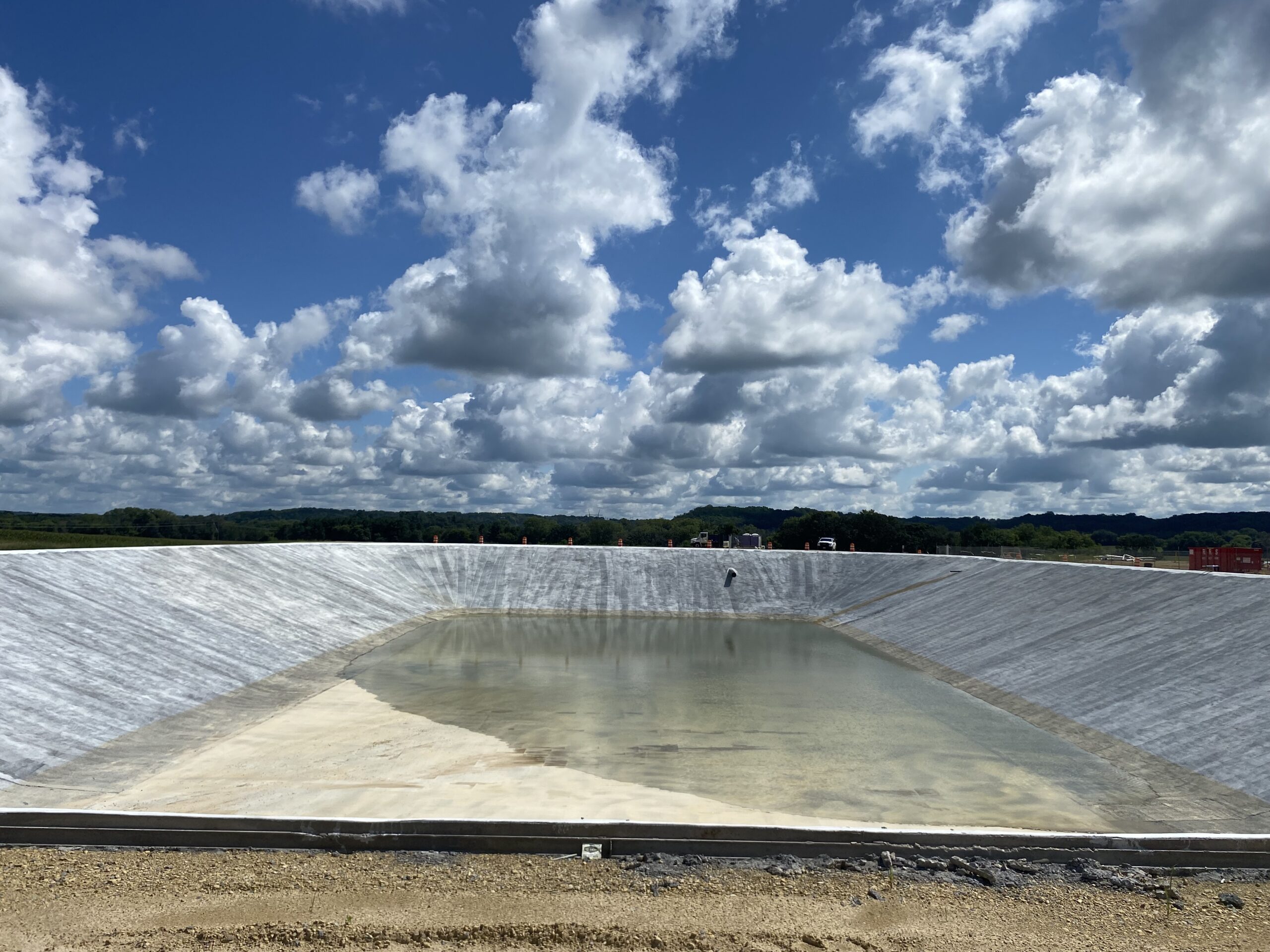
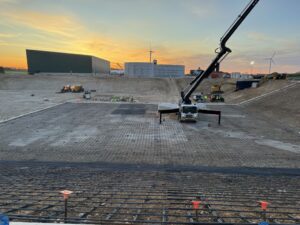
MSA proposed construction of a 54,000-square-foot, new watertight concrete digestate storage with 26.5’ deep sloped walls. This provides the farm with six months of available storage at a usable storage volume of 11 million gallons. A sandy subsoil morphology pushed the project to utilize an American Concrete Institute (ACI) 350 environmentally sensitive concrete design. To maximize storage potential of the facility, a HDPE cover was installed over the storage with appropriate venting and MSA-designed stormwater management.
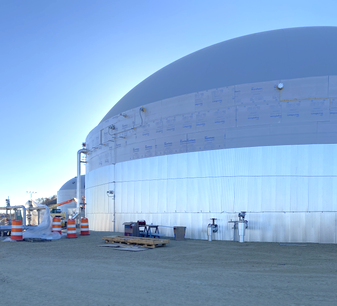
To facilitate efficient removal of waste from the storage and allow proper nutrient application to farmland, MSA proposed two methods of loadout. The first is a loadout station allowing manure tankers to be top loaded from a station operated by wireless smart remotes. The system is designed to load a truck in two minutes. The second method of loadout is a permanent manure pipeline totaling approximately 13,300 linear feet of HDPE pipe. This pipeline runs in multiple directions and has various ports to allow the farm to have permanent access to manure at field locations, reducing truck traffic, road wear and tear, and labor requirements during nutrient application.
This project was selected to receive a 2025 Concrete Design Award in the Sustainable category from the Wisconsin Ready Mixed Concrete Association (WRMCA).
Contact Project Lead

Andrew R. Skwor, PE
Senior Team Leader - Agricultural Services
Related Projects
Kieler Farms, Inc. Expansion
Expanding a family dairy operation to meet global supply demands and continue farming for generations to come.
MoreEden Tangoon & Anaerobic Digester
Dinnerbell Farms is located in Eden, Wisconsin, and is owned and operated by the Grahl family, milking 275 cows. They have partnered with Vanguard Renewables, a Boston-based sustainable waste management and clean energy company, for construction and operation of an anaerobic digester that will harness the farm’s manure as well as off-site food waste to create energy — specifically renewable natural gas. This anaerobic digester will produce 710 MM btu or 208,000 kWh per day, which will contribute directly to the distribution gas pipeline network and supply 4,200-6,300 homes per year with reliable natural gas.
MSA was asked to assist with multiple disciplines of the project, including site civil design for the digester site including stormwater design, permitting, and structural design for a new digestate storage facility. The site is approximately 10 acres of improvements including an organics receiving area, anaerobic digester, and associated components such as hydrolysis tanks and biogas upgrader, metering and regulation pad for grid injection, digestate storage and stormwater management features.
The first component of the Eden digester project involved navigating numerous challenges to site a digestate storage. A predetermined lease area partnered with a property line setback presented a challenge in providing sufficient storage volume within a small footprint. This was complicated by a large amount of grade change across the site. A sandy subsoil morphology pushed the project to utilize an American Concrete Institute (ACI) 350 environmentally sensitive concrete design.
MSA agricultural engineers proposed construction of a 116,160-square-foot new watertight concrete manure “tangoon” — a combination of a traditional lagoon and vertical wall tank — with 18’ deep sloped walls, topped with an 8’ vertical wall. This provides the farm with 6.5 months of available storage at a usable storage volume of 17.1 million gallons.
Structurally, the tangoon design consists of a typical straight retaining wall with a footing that transitions into the sloped side walls of the lagoon. The tangoon also has an entrance ramp at the northwest corner.
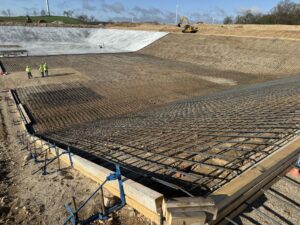
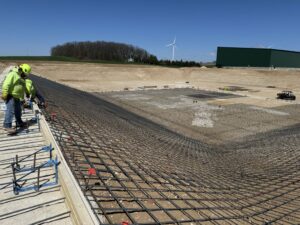
A few design challenges arose during the project, such as at the connection joint between the retaining wall footing and the lagoon side wall. The retaining wall footing had limited width due to nearby structures and required a sliding restraint from the lagoon slab. To resist sliding, the lagoon slab was raised, flattened, and thickened to match the wall footing. This provided enough concrete to dowel the footing without cracking the thinner lagoon slab. Footing reinforcement was carried across the joint and lapped with the lagoon reinforcement. Additionally, for constructability, the ramp side walls used the same wall and footing design as the retaining wall. All structural elements were designed in accordance with ACI 350 standards pertaining to maximum reinforcement spacing, temperature and shrinkage, slab and wall thicknesses, etc.
MSA engineers also worked to provide a site design for the provided layout of the digester site that met the owner’s needs for access, traffic flow, permitting requirements, and safety — and accommodated stormwater requirements while fitting all components within the specified lease area. A special component was designed for the truck liquid offloading area for food wastes as well as an intricate truck scale design within a limited footprint.
Other MSA-designed components included the transfer system from Dinnerbell Farm’s existing under-barn manure storage system, a sand separation system in partnership with Komro Sales & Service, and a loadout station for manure tankers to easily collect digestate for land application.
This project was selected to receive a 2024 Concrete Design Award in the Agricultural category from the Wisconsin Ready Mixed Concrete Association (WRMCA).
More