
Creamery Creek Dairy Expansion
Creamery Creek Dairy in Bangor, Wisconsin, is the result of a deliberate partnership and a long-term vision for what modern dairy farming can be. Established in 2010 when the Peterson and Hansen families combined their herds, the farm represents both generational legacy and forward-thinking growth. Rooted in a multi-generational farming heritage and guided by a belief that agriculture should be sustainable, transparent, and connected to consumers, Creamery Creek has steadily evolved into a progressive, diversified operation that prioritizes both stewardship and innovation.
That commitment to progress was put to the test in 2023 when the farm undertook a significant expansion within a constrained brownfield site to construct a second dairy featuring robotic milking technology. Transforming a previously developed industrial parcel — bounded by a county highway, adjacent railroad, and existing utility conflicts — required more than conventional design. It demanded a coordinated approach to site planning, infrastructure integration, and regulatory compliance within two dairies in different locations.
With MSA’s support, the project navigated these constraints while turning a challenging property into a highly functional, state-of-the-art dairy facility.
A defining decision early in the process was Creamery Creek’s move to become a state-permitted operation, committing the farm to a higher standard of environmental performance. Designing to meet a zero-discharge requirement for pollutants introduced added complexity to every aspect of the expansion, from runoff containment to manure management. MSA worked alongside the farm to guide planning and permitting across township, county, and state levels, ensuring the project not only met regulatory expectations but positioned the operation for long-term compliance and resilience.
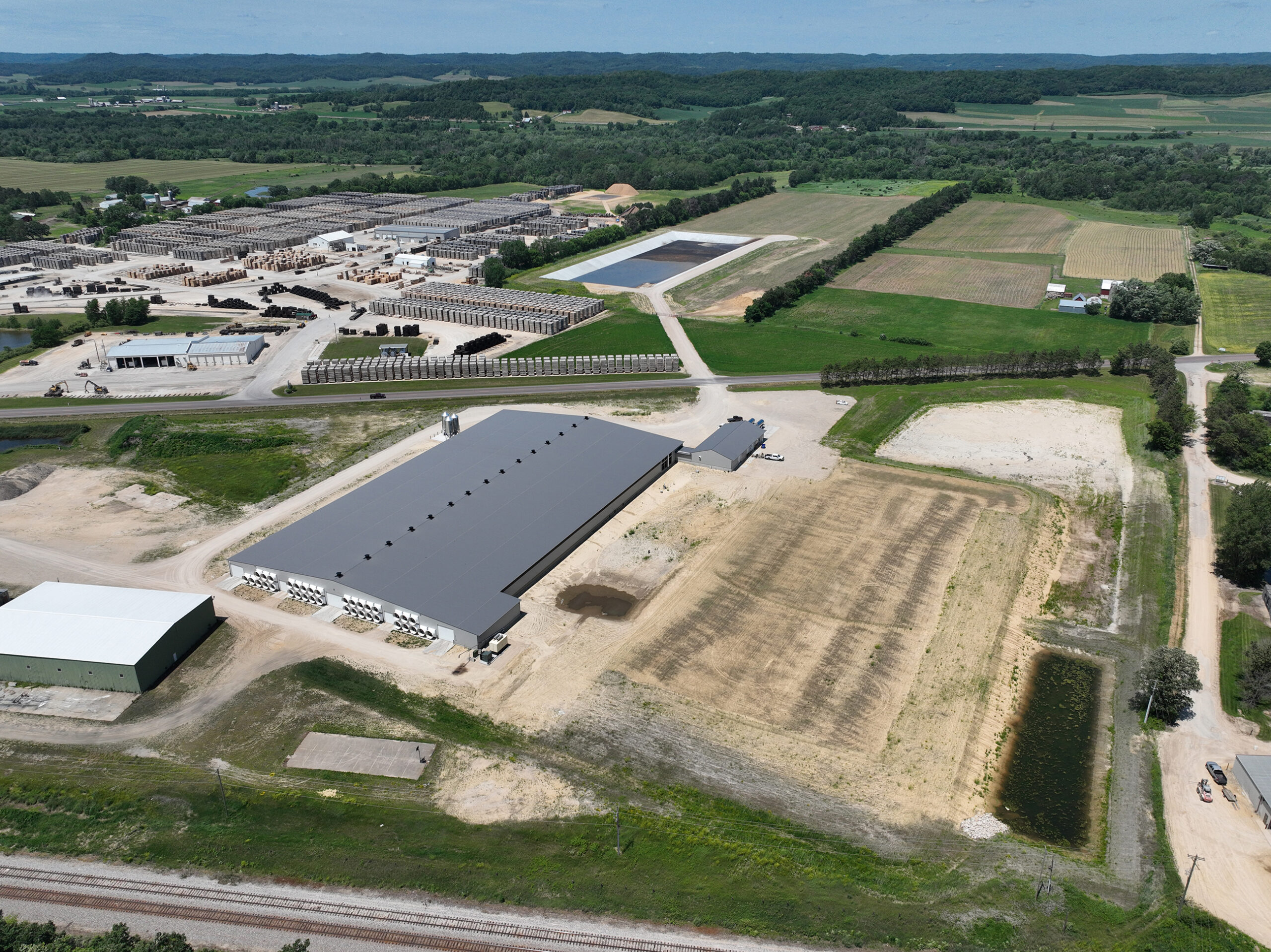
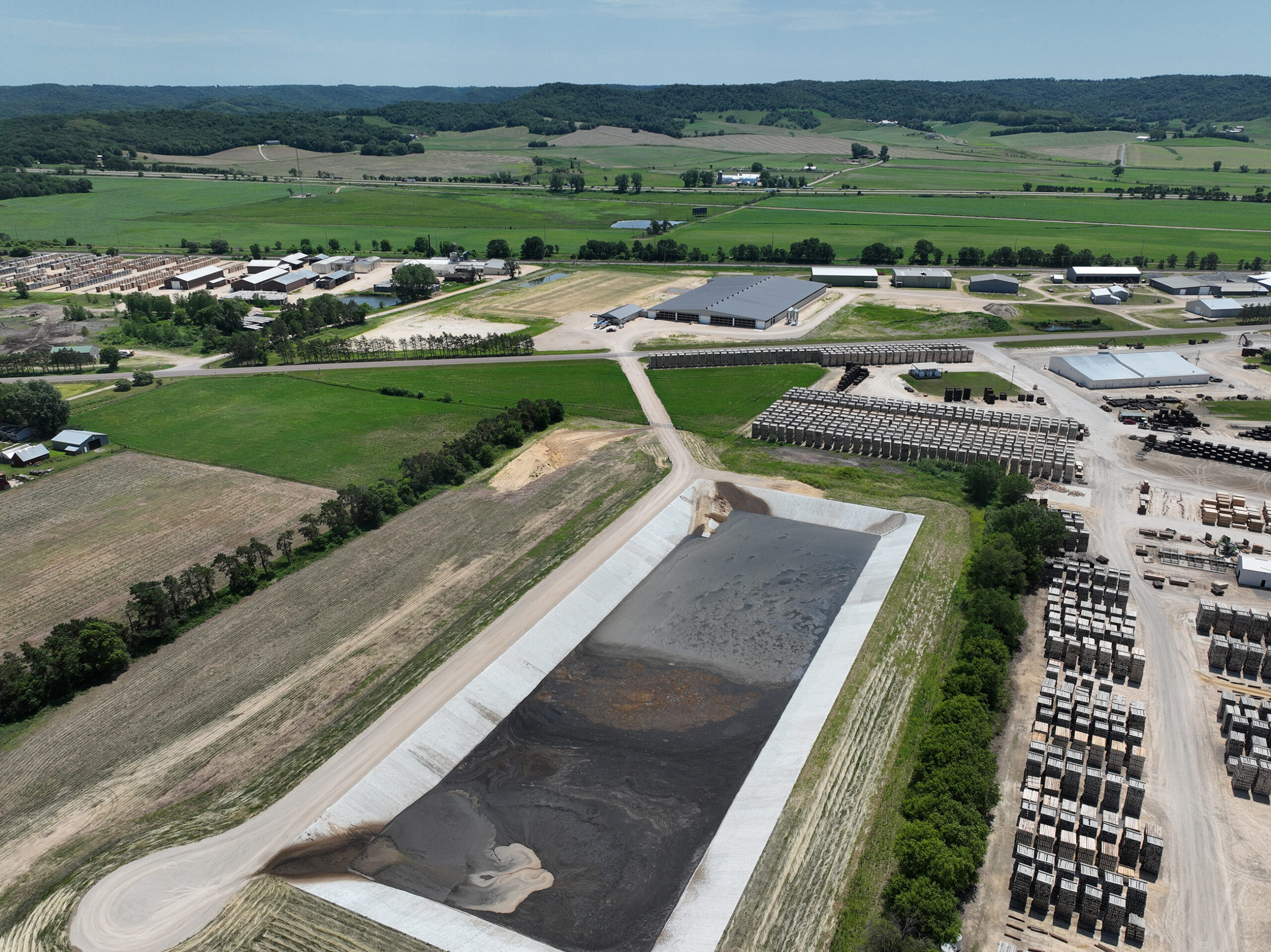
The resulting expansion increased the herd by 1,000 cows and introduced 15 million gallons of manure and wastewater storage, all carefully engineered to suit site-specific conditions. With sandy soils limiting traditional approaches, the project required concrete storage structures designed to more stringent standards than typical waste storage structures. Manure transfer infrastructure — spanning more than 1,500 feet across a county highway — added further complexity, requiring detailed coordination of easements, permitting, and utility crossings. Each element was designed not only for current capacity, but with future adaptability in mind, including provisions for a sand separation system and the ability to expand barn capacity over time.
Stormwater management presented its own set of challenges, requiring an integrated system of a wet pond, infiltration basin, and carefully routed swales and piping to maintain control and compliance. These layered solutions demonstrate a comprehensive approach to site engineering — balancing operational efficiency, environmental responsibility, and regulatory compliance within a highly constrained footprint.
Throughout the project, MSA’s role extended beyond design to strategic problem-solving, helping the farm align its goals with practical, buildable solutions. The expansion reflects not only technical expertise, but an understanding of agricultural operations and the importance of planning for both immediate functionality and long-term growth.
Today, Creamery Creek Dairy stands as an example of how modern farms can embrace advanced technology, meet stringent environmental standards, and expand responsibly without losing sight of their roots. With thoughtful planning and a commitment to doing things right, the project demonstrates how complex agricultural challenges can be transformed into opportunities — benefiting the farm, the surrounding community, and the environment for generations to come.
Contact Project Lead

Andrew R. Skwor, PE
Senior Team Leader - Agricultural Services