
Waterfront business owners should recognize one thing: if you pollute your natural resources, you pollute your revenue stream.
Marinas sit at the intersection of recreation, industry, and shoreline ecology, which means that stormwater management isn’t just an environmental issue — it’s a daily operational task.
Yet proper stormwater management isn’t always top of mind, and hiring the right professionals to do the work can feel like both a time and budgetary constraint. The truth of the matter is, when done well, stormwater systems can satisfy both form and function — protect our waters from harmful pollutants and increase the marketable value of our marinas.
Stormwater BMP Basics
Stormwater Best Management Practices (BMPs) are the guiding principles set forth by the American Society of Civil Engineers (ASCE) Manual 50: Planning and Design Guidelines for Small Craft Harbors. These best practices have been established to protect natural resources such as lakes, rivers, and oceans, from contamination. The BMPs target pollutants called total suspended solids (TSS), which are undissolved particles larger than 2 microns in size such as sand, gravel, silt, salt, runoff, or man-made pollutants (gas, oils, chemicals, etc.). TSS in large quantities are known to pose a threat to the health of our aquatic ecosystems by decreasing water’s natural dissolved oxygen levels and increasing water temperature. TSS can also escalate the turbidity of water, blocking sunlight and stunting photosynthesis — not to mention, turning the look and feel of a once-pristine water body into something far less desirable.
Common sources of TSS pollution at marinas and waterfront properties are impervious hardscapes. Think: parking lots, buildings, roofs, roads, and sidewalks. Parking lots are some of the worst culprits as they are collectors of all sorts of contaminants from vehicles such as salt, mud, gas, and oils. All these pollutants are funneled into the nearest lake or river, if left unaddressed. Fortunately, marinas have a variety of opportunities to incorporate impactful management systems to intercept these pollutants before they reach the water.

Collection & Treatment Options
A few key elements of stormwater management include sediment basins, constructed wetlands, rain gardens, and forebays. Options vary in shape and size and can be excellent aesthetic enhancements to a marina.
Sediment basins are designed to capture and temporarily store stormwater runoff, slowing water flow and allowing time for sediment to settle before discharge.
Constructed wetlands are comprised of a combination of wetland vegetation, soils, and microbial properties that filter sediments and pollution to help improve water quality on its way to receiving lakes and rivers.
Rain gardens are relatively shallow depressions in the ground planted with native vegetation to capture and filter stormwater runoff. Rain gardens excel at preventing erosion by establishing deep roots that hold soil in place and are a cost-effective (and beautiful) means to introduce perennial plants and attract birds while reducing runoff.
Forebays are small, engineered basins for collecting stormwater and a means to trap and filter sediment, debris, and runoff before it enters a larger body of water. They function very much like rain gardens: living, growing, wetland-like features with native plants whose deep roots absorb water and sediments — “cleaning” contaminants through a combination of microbial action in the soil, vegetative uptake, evaporation and transpiration.
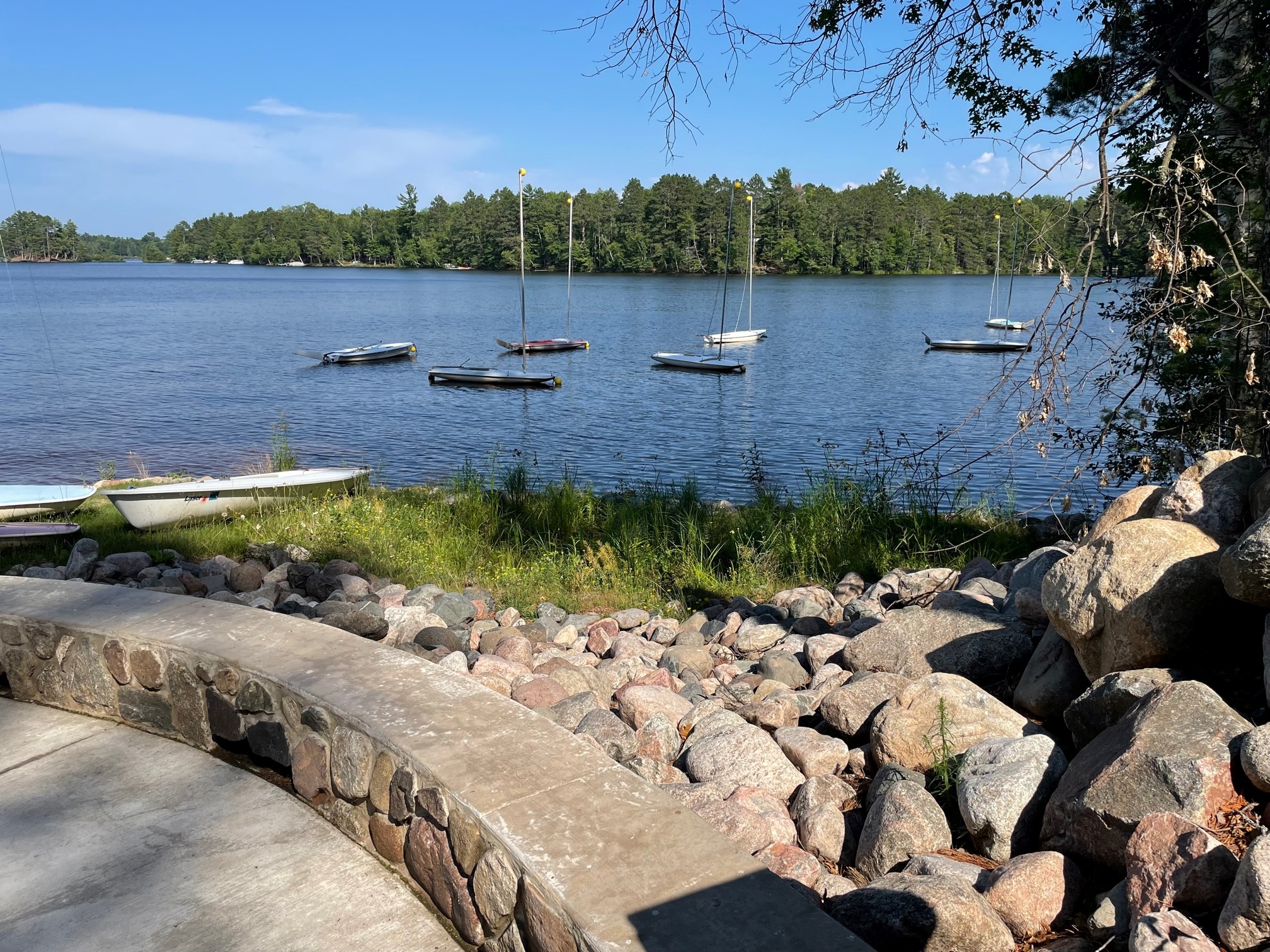
Rain gardens with native plantings complement the shoreline at YMCA Camp Manito-wish in Boulder Junction, Wisconsin.
Benchmark Design
Yet simply “addressing” stormwater issues is not the answer. Effective stormwater management goes beyond simply installing the features mentioned above by turning functional features into amenities that elevate the marina experience.
As engineers, designers, and stormwater professionals, we are compelled to make traditional BMPs the baseline, not the benchmark. While most DNRs do not require utilizing a professional stormwater engineer or design team to do the work, we feel this is the most holistic strategy to protect the environment, boost business, and deliver the most functional and aesthetically appropriate solution possible.
What do we mean when we say, “aesthetically appropriate?” We mean considering the context of a location. For example, a stormwater management system developed for a marina on the Great Lakes should incorporate elements designed to look like the edge of a coastal wetland, utilizing plants that would be native to that environment. Stormwater design at marinas along riverfronts, by contrast, should replicate the riverine environment, with sediment bays or constructed wetlands showcasing species such as cattails, rushes, and emergent plants and grasses that are adaptable to wet soils and assist with erosion control. The goal is to make the functional side of stormwater management seamlessly integrate into the surrounding environment.
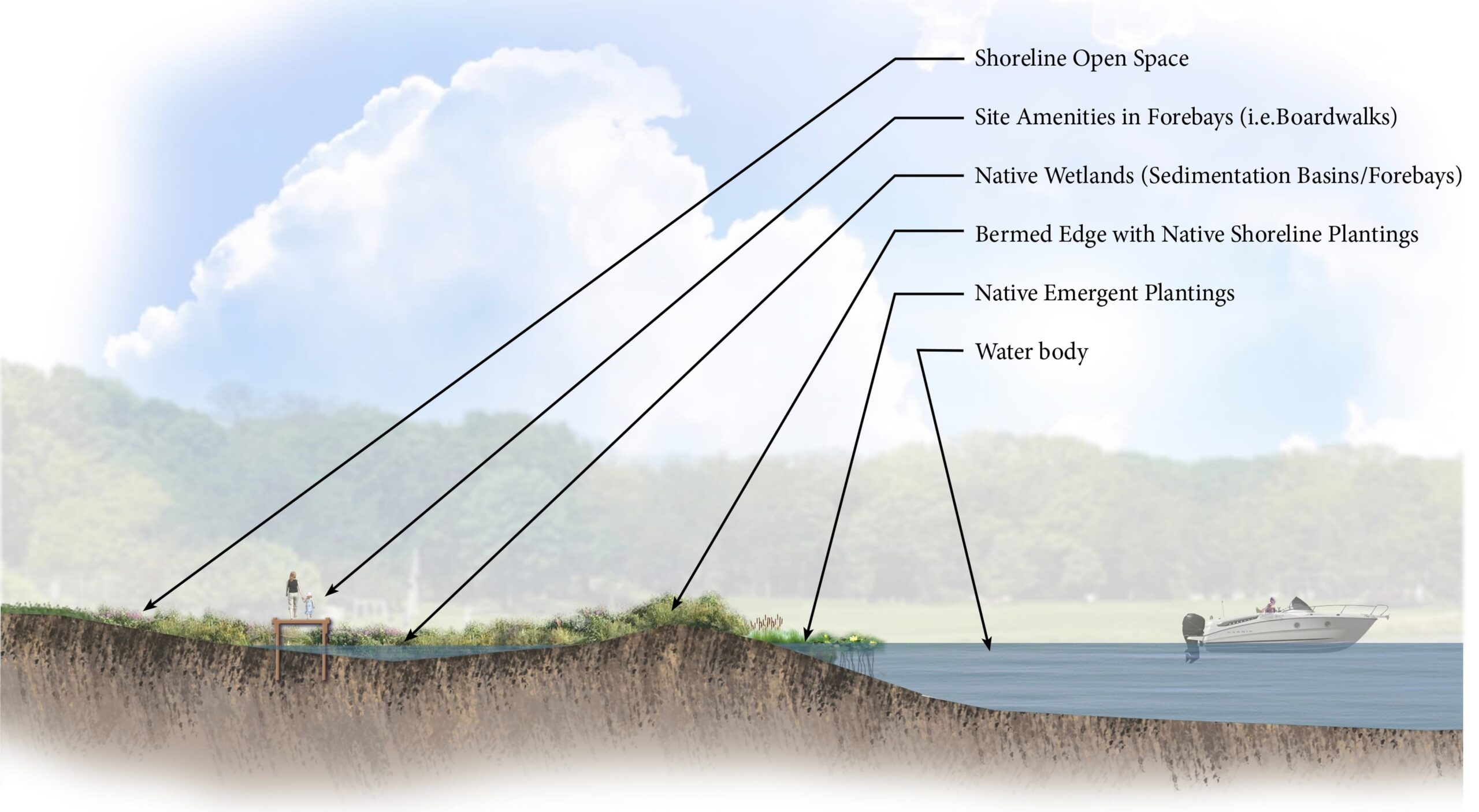
This holistic design approach can be referred to as “green engineering” and can be guided by the expertise of a professional landscape architect. Landscape architects and engineers team up to assess both the hardscape and the softscape of a site and consider how they work together to create one cohesive user experience. In the case of stormwater management, these professionals can be instrumental in helping to neutralize the impacts of the built environment by creating green spaces, wetlands, restoration areas, pollinator habitats, sediment bays, forebays, or rain gardens to thoughtfully disguise the operational performance of the stormwater infrastructure. The end result is something of functional beauty — much more pleasing to the eye than a large overland pipe funneling stormwater through the heart of a marina community.
But doesn’t it cost more to employ a professional stormwater engineer or landscape architect? Not necessarily. There may be a greater up-front investment to engage a professional and the process might take a bit more time, but the long-term cost benefits and relatively quick return on investment are most certainly worthwhile. More importantly, proper stormwater design can be highly nuanced as well as very site-specific. The goal is to do the work once and do it correctly, without adversely impacting the surroundings or the aesthetic of the marina or waterfront property.

Bioretention basins help prevent water runoff at the Lac La Belle boat launch.
The Value of Sound Design
The true value of a properly designed and engineered stormwater system is public perception. When things look good, they feel good. People will want to be patrons; they’ll want to keep their boats at the marina and show off the property to friends. Creating a clean, polished marina atmosphere attracts new customers and retains existing ones. A thoughtfully designed stormwater management system is a big part of that.
Stormwater systems offer great opportunity to enhance the entire marina ecosystem, design more resilient public spaces, and improve site aesthetics. When thoughtfully designed, these systems transform regulatory obligations into features that elevate the customer experience and support the long-term health of the waterfront. Most importantly, they reflect a marina’s commitment to environmental stewardship, illustrating to boaters, visitors, and the broader community that caring for our waters is at the heart of responsible marina ownership. By embracing this mindset, marinas not only protect their natural resources but also ensure the enjoyment of our recreational waters and revenue source for generations to come.
This article was first published in Marina Dock Age Magazine in March, 2026.
Authors