
Marinas have historically served as the starting point of an experience.
Today, the most profitable waterfront properties are the experience itself — a place where people linger, laugh, eat, play, and come back with friends and family. The mindset shift is simple: stop thinking of your business as a service hub for boaters or campers and start designing it as a water- and nature-based recreation destination for everyone — families, teens, older adults, groups, non-boaters, and first-timers. When your waterfront becomes an attraction in its own right, revenue expands far beyond slip fees, seasonal rentals, and selling sunglasses.
The market is rewarding destinations that blend outdoor authenticity with family entertainment-center-style energy, a format that feels nothing like the static, chlorine-forward vibe of many indoor aquatic facilities. Outdoor, open-water play brings something inherently dynamic: wind, waves, sunlight, movement, and real scenery. It’s an experience that can’t be replicated indoors and one that naturally produces the kind of memorable moments people want to share.
If You Build It, They Will Come
The highest-performing waterfront operators are not only asking what amenities they can add — they’re asking why someone would choose to spend an entire day at their property. A strong destination begins with a signature attraction, something that defines the experience and gives people a reason to make the trip. Around that anchor, successful operators layer in programming such as music events, leagues, and themed experiences that create energy throughout the season. Food and beverage offerings are not an afterthought but a core driver of revenue, designed to keep guests on site longer and encourage repeat spending. Comfort also plays a critical role: shaded seating, accessible walkways, restrooms, and thoughtful guest flow all contribute to an environment where visitors feel welcome and want to stay. When these elements work together seamlessly, the waterfront evolves from a transactional stop into a full-day destination — and that’s where sustainable revenue growth occurs.
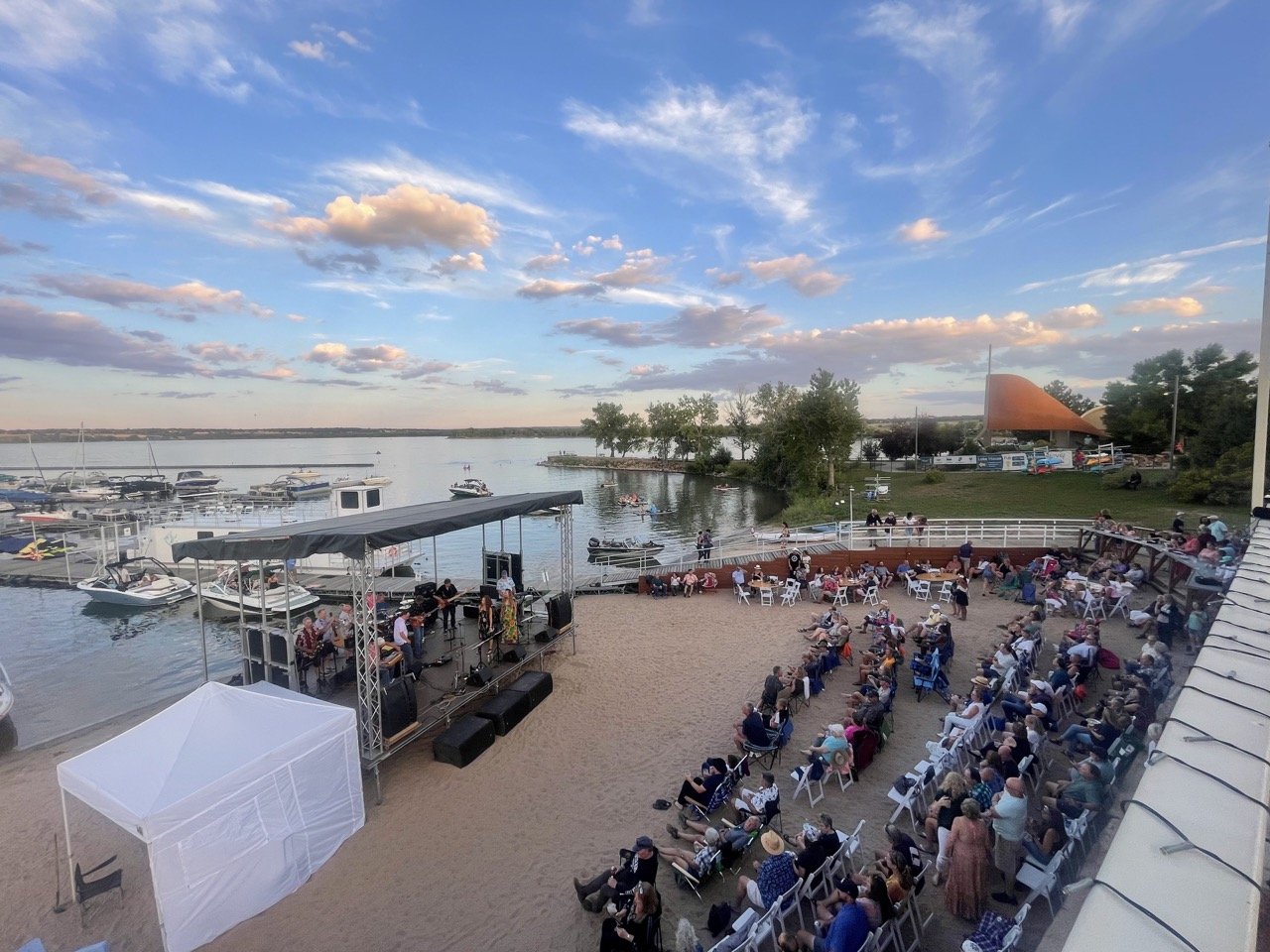
Anywhere There’s Water — Yes, Even There
One of the most exciting aspects of this shift toward experiential waterfronts is the flexibility. These concepts are not limited to oceanfront resorts or large-scale destinations; they can be implemented on inland lakes, rivers, freshwater reservoirs, reclaimed quarries, or man-made lagoons. Even smaller marinas, resorts, and campgrounds can participate by scaling the experience to fit their footprint and audience. The goal is not uniformity but adaptability. Whether the objective is to introduce a new recreation amenity, stand out in a competitive market, expand programming, or unlock new revenue streams, a thoughtfully designed water-based experience can achieve all of these simultaneously.
Modern Floating Aqua Parks
At the center of many of today’s waterfront transformations is a floating inflatable water park — modular obstacle courses that combine climbing, bouncing, sliding, and jumping into one cohesive experience. These installations are gaining traction because they are flexible, scalable, and easy for guests to understand. Companies like Wibit Sports offer a variety of open-water inflatables customized to fit a specific waterbody and which can be expanded over time as demand grows. Their global reach and long-standing presence in the industry demonstrate that these attractions are not a novelty but a proven model, with installations across dozens of countries and millions of participants engaging with them worldwide.
From an operational perspective, these floating parks naturally align with revenue generation. They lend themselves to timed ticketing models, such as one- or two-hour wristbands, daily passes, and season memberships. By controlling capacity and structuring access in intervals, operators can create a premium experience that feels both exciting and exclusive. The simplicity of the model is part of its strength. Guests immediately understand how it works, and operators can easily scale pricing strategies based on demand.
Adding “Wow” Layers: Signature Attractions & Floating Real Estate
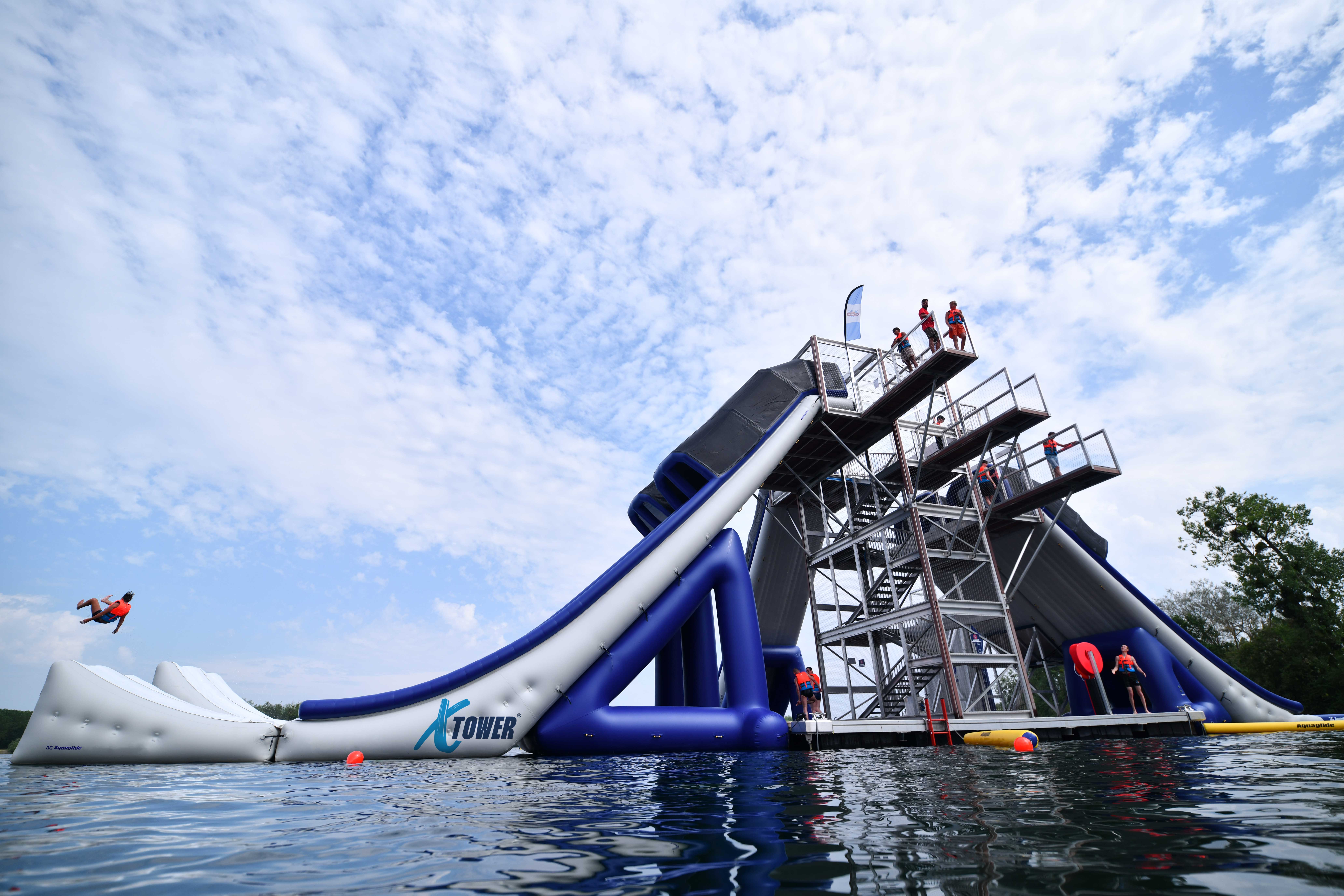
X Tower photo courtesy of Boaz Concept.
Once an anchor attraction is in place, the next step is to enhance the experience with features that appeal to a broad demographic range. Vertical elements such as floating towers introduce a visual and experiential focal point that draws attention from across the waterfront. Attractions like the X Tower, which rises roughly 40 feet above the water and combines slides, climbing features, and jump platforms, are designed to create high-energy engagement and turn spectators into participants. These structures serve as both an attraction as well as a landmark, reinforcing the identity of the destination.
Equally important are comfort-driven enhancements. Floating cabanas, lounge platforms, and shaded relaxation areas provide a counterbalance to high-energy play and create opportunities for premium upsells. These elements encourage guests to settle in for the day, transforming a short visit into a longer, more valuable stay. Families, in particular, value spaces where they can relax while staying connected to the action.
Novelty programming adds another dimension. The introduction of floating sports — such as pickleball courts on water — demonstrates how traditional activities can be reimagined to create buzz. At the 2026 Palm Beach International Boat Show, a floating pickleball court became a headline attraction, complete with a competitive tournament and open play sessions for attendees. The lesson is clear: when familiar activities are placed in unexpected environments, they become exclusive experiences people are eager to try.
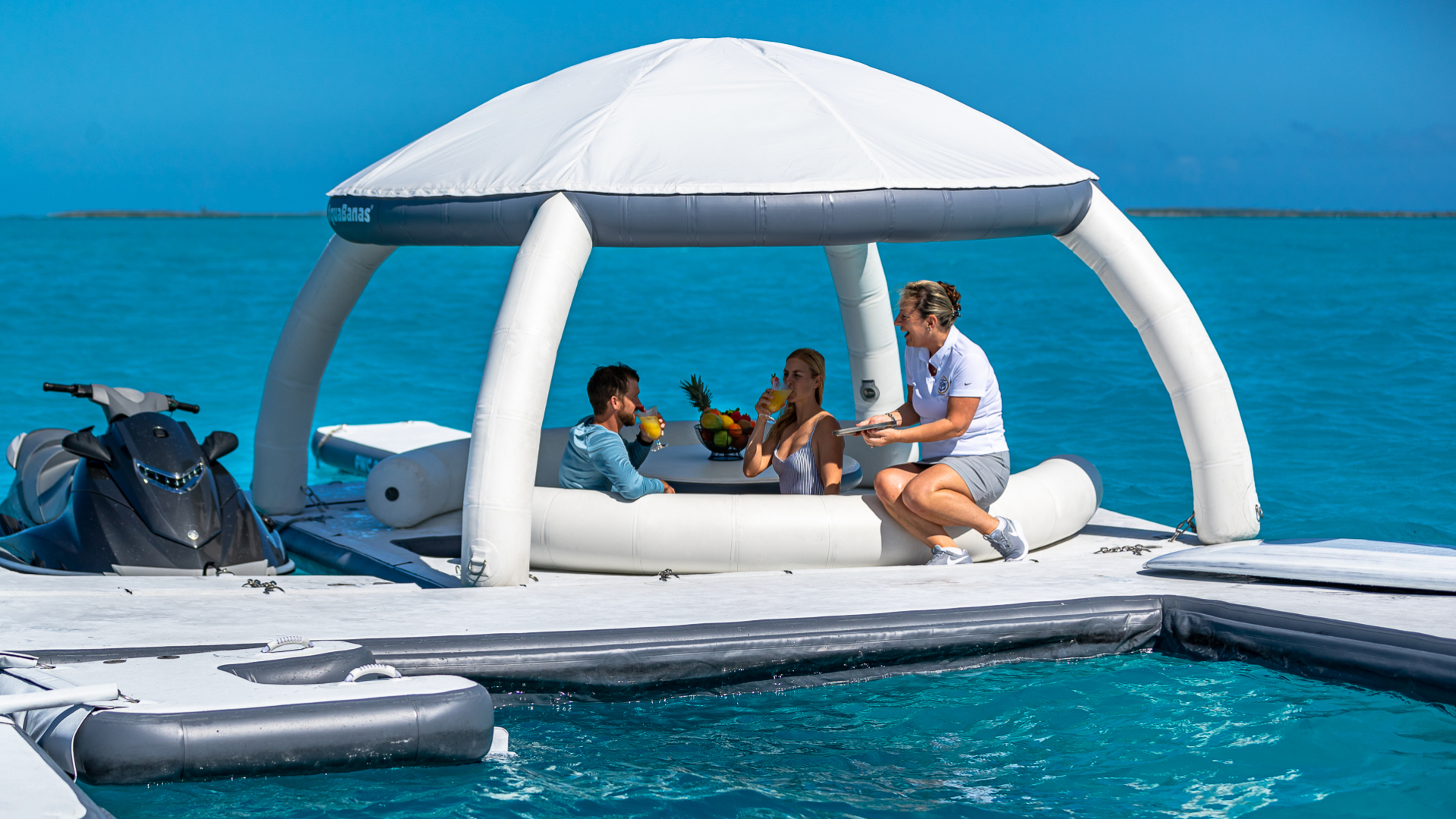
Inflatable floating cabana photo courtesy of AquaBanas.
Finally, no destination is complete without a dedicated family zone. Shallow-water play areas, smaller-scale inflatables, and kid-friendly platforms ensure that younger visitors are just as engaged and active as thrill-seekers. When children are having fun, families stay longer, which often results in repeat visits and positive word-of-mouth recommendations.
Safety & Staffing
Safety is a foundational component of any successful waterfront destination, and it must be integrated into both design and operations. Clear guidelines — such as mandatory life jackets, age and height restrictions, and supervision requirements — help create a consistent and predictable environment. Regular safety checks and visible staff presence reinforce confidence among guests, allowing them to relax and fully enjoy the experience.
Operations and staffing should be structured to support these protocols without disrupting the flow of activity. Scheduled rotations, training programs, and clearly defined roles ensure that safety remains a priority while maintaining a high-quality guest experience.
Food & Beverage: a Scheduled Revenue Multiplier
Food and beverage services are one of the most powerful and often underutilized tools for increasing revenue within the waterfront experience. Rather than viewing breaks in activity as downtime, many successful operators time their schedules to encourage natural transitions toward snacking and dining. Water park safety checks, session changes, and staff rotations can be timed to nudge guests toward snack stands, food trucks, or dockside restaurants in visible and convenient locations.
Even simple concepts can be highly effective. A burger boat, a floating bar, or a small cluster of local vendors can create a vibrant food scene that complements the recreation experience. Over time, these offerings evolve into signature components of the destination, building its identity and drawing visitors who may come as much for the atmosphere as for the attractions.
Engineering Matters: Fun Needs a Foundation
Behind every successful floating attraction is a carefully engineered system. Site planning must account for access, water depth, environmental conditions, and proximity to boat traffic or utilities. Professional designers often develop detailed layouts that include anchoring strategies, circulation patterns, and safety zoning. Floating structures like towers and inflatable parks must be securely anchored while still accommodating fluctuations in water levels, which requires specialized engineering and installation expertise.
In some environments, additional solutions such as floating substructures or adaptable anchoring systems may be necessary to maintain stability and performance. Engaging experienced professionals early in the planning process helps ensure that the final installation is both safe and durable, reducing the risk of costly adjustments later.
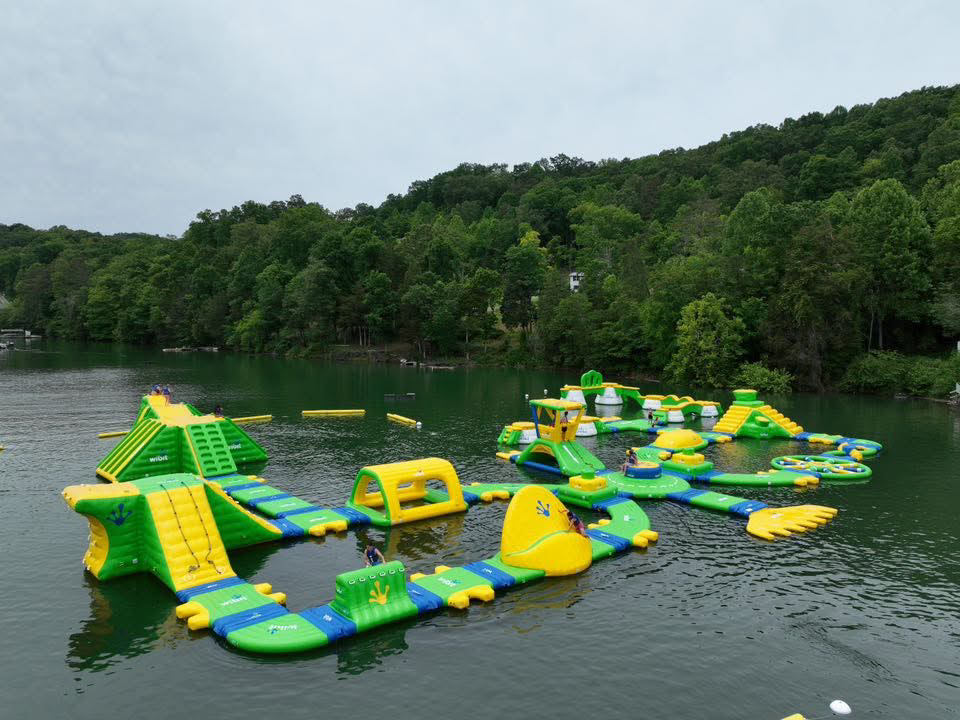
Inflatable Wibit course at Sugar Hollow Marina in LaFollette, TN.
Permitting: Start Early, Avoid Surprise Delays
Permitting is one of the most important early considerations for any waterfront development. In the United States, projects that involve structures in or over water may require authorization from agencies such as the U.S. Army Corps of Engineers, which regulates work in navigable waters under federal law. Depending on the scope of the project, additional approvals may be needed under environmental regulations governing water resources and land use. Because requirements vary by location, engaging with local and state authorities early in the process is essential. Understanding permitting pathways upfront helps avoid delays and ensures that the project can move forward smoothly.
Increased Demand = More Supporting Infrastructure
As your destination grows in popularity, the supporting infrastructure must be able to keep pace. Increased visitation places demand on parking, restrooms, utilities, and staffing. Without adequate preparation, a successful attraction can become overwhelmed, quickly diminishing the guest experience. Properly planning for growth means ensuring that access, services, and operational systems are easily scalable and capable of handling peak demand.
A Destination Readiness Mindset
At its core, the evolution of waterfront properties into destinations comes down to a shift in perspective. When you design and plan for experience first — creating places where people can play, relax, eat, and connect — you unlock opportunities that extend your impact far beyond traditional marina operations. The result is not just increased revenue but a more vibrant, memorable environment that keeps people wanting to come back season after season.
This article was first published in MSA’s Water Marks column in Marina Dock Age Magazine with special thanks to industry partner and co-author Ron Romens, president at Commercial Recreation Specialists.
Authors